Techniques

Bubble painting

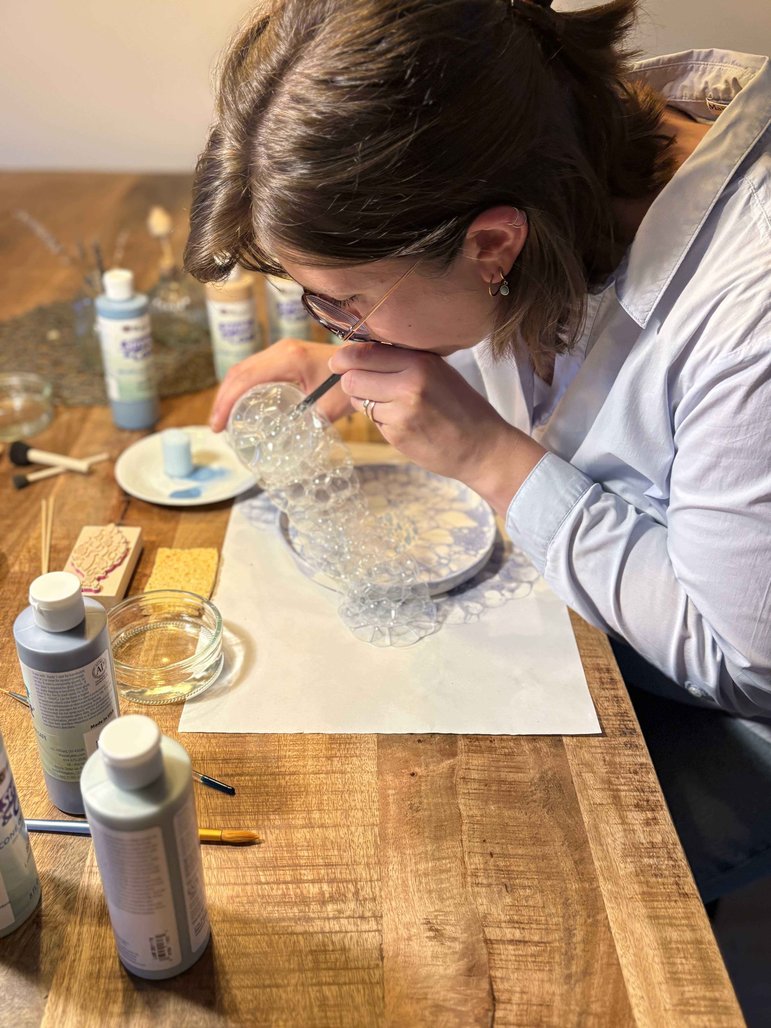
The bubble technique produces a playful, organic pattern of overlapping circles. You mix underglaze with washing-up liquid and water, blow bubbles and let them burst on the ceramic. No two results are the same! What do you need? Ceramic piece of your choice Liquid underglaze Washing-up liquid Water A straw or bubble blower A small bowl How it works Mix underglaze in a bowl with a splash of washing-up liquid and a little water. Blow bubbles through a straw into the mixture until you have a generous foam layer. Carefully let the foam fall onto your ceramic and wait for the bubbles to pop. The bubble edges leave a circular pattern on the ceramic.
Continue reading

Dotting

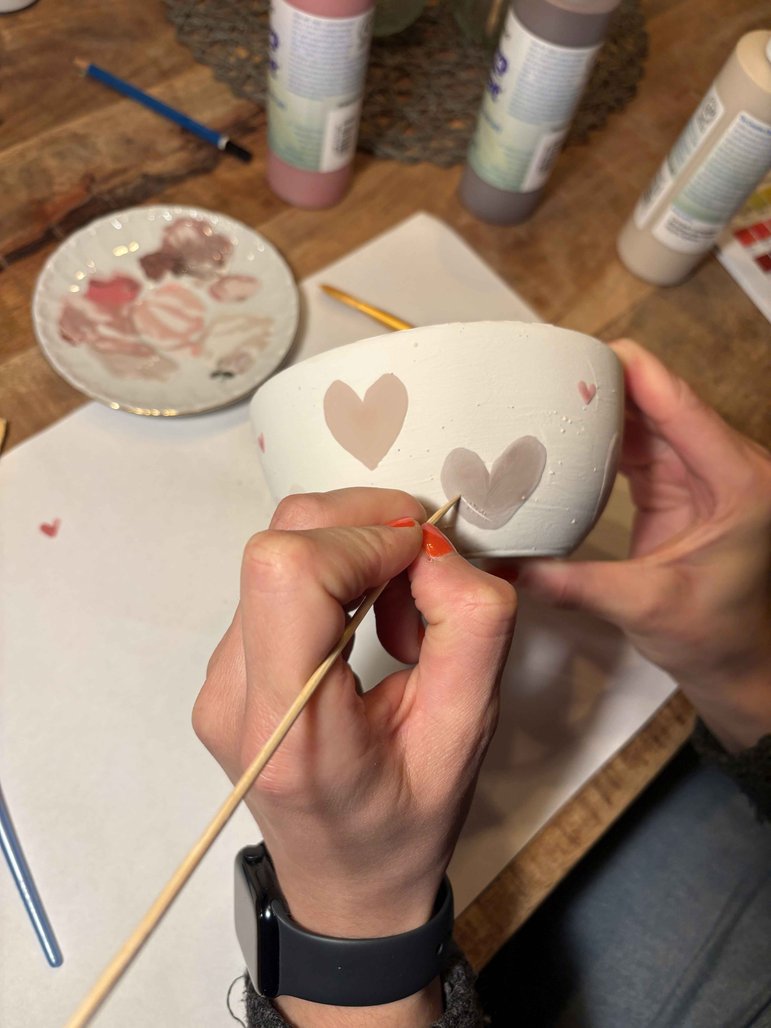
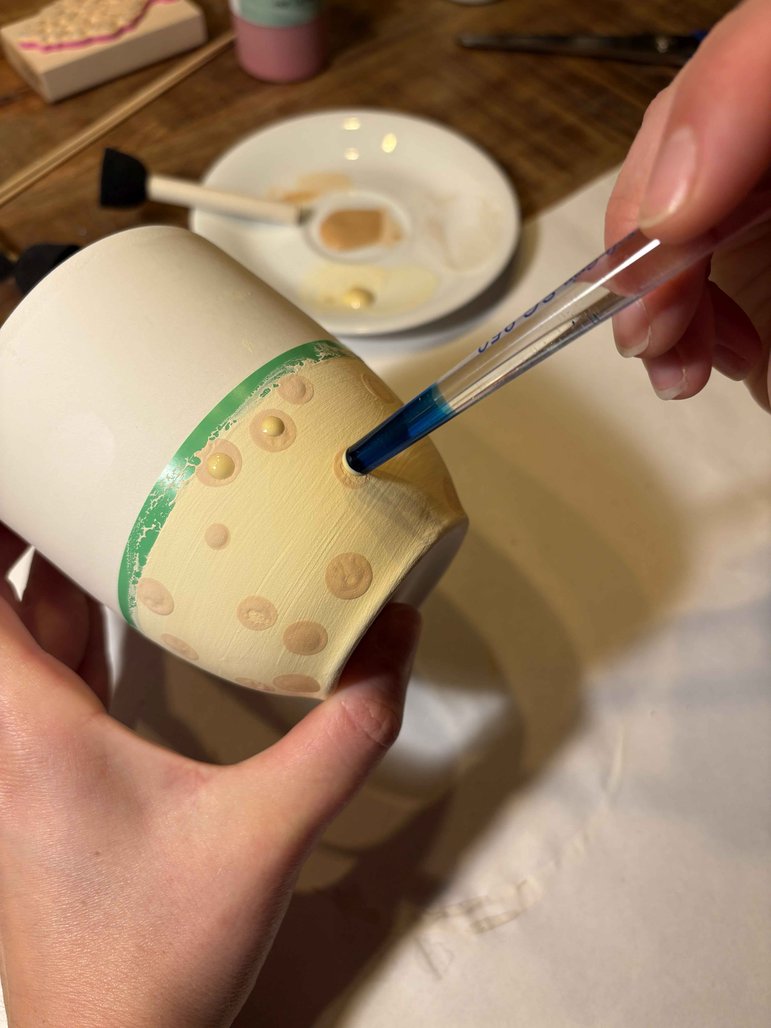
The dotting technique is one of the easiest and most enjoyable ways to paint ceramics. Using the back end of a brush you place colourful dots on your piece. What do you need? Ceramic piece of your choice Underglazes in various colours Back end of a brush, toothpick or satay skewer How it works Dab the back of your brush or another tool into the paint and make a dot on your ceramic. It works best if you dip back into the paint before each dot. Experiment with different sizes and colours for a playful effect.

Continue reading

Fingerprinting

With the fingerprint technique you use your own finger as a stamp. The oval shape of a print is the perfect starting point for all kinds of little figures: an owl, a fox, a tree or a cheerful little person. With a fine brush or writing bottle you then add the details. What do you need? Ceramic piece of your choice Underglazes in various colours Your fingers A sponge A fine detail brush, writing bottle or ceramic pen for finishing How it works Dab the sponge in a thin layer of glaze. Pat excess paint off the sponge well. Press your finger onto the sponge and then firmly onto the ceramic. Let the print dry. Then use a fine brush to add legs, eyes, ears or branches to the print to complete the figure. Combine multiple prints for larger scenes: a tree full of owls, a row of little people or a family of animals. Instead of your finger, you can also use foam sticks of different sizes.

Continue reading

Masking

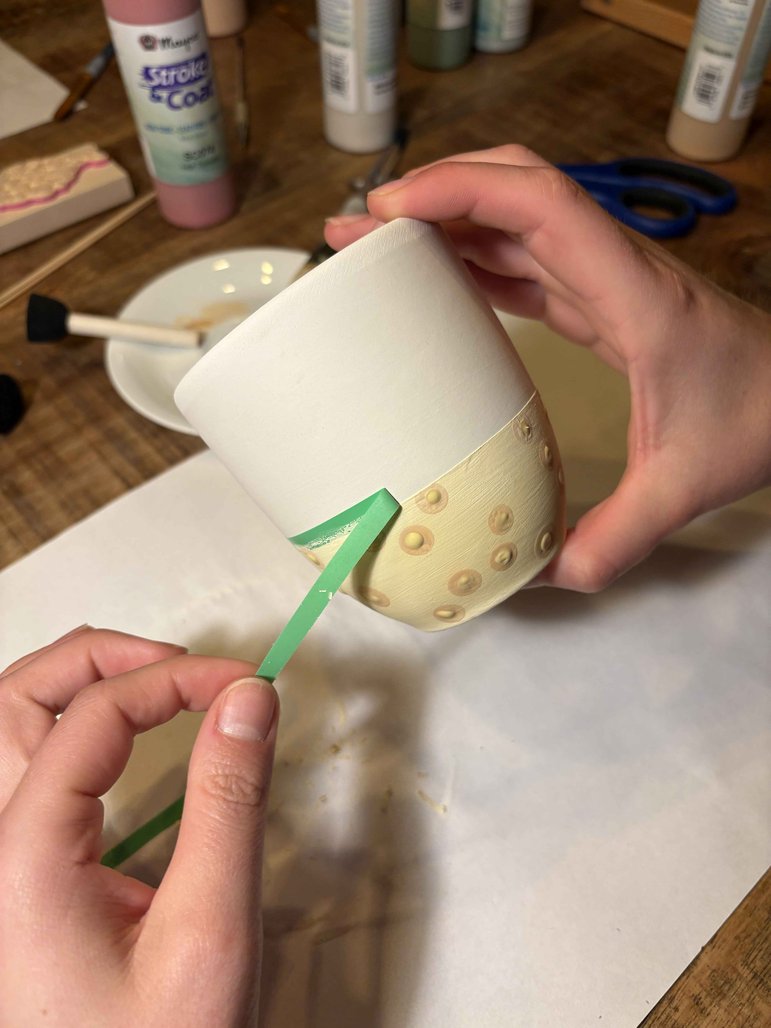
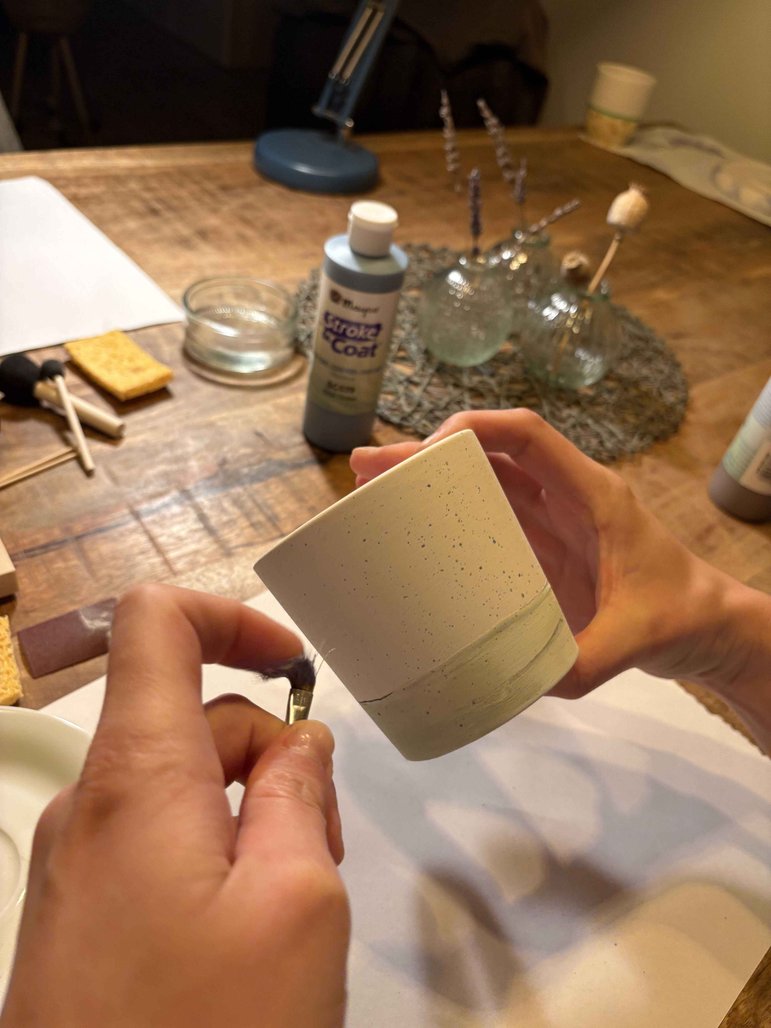
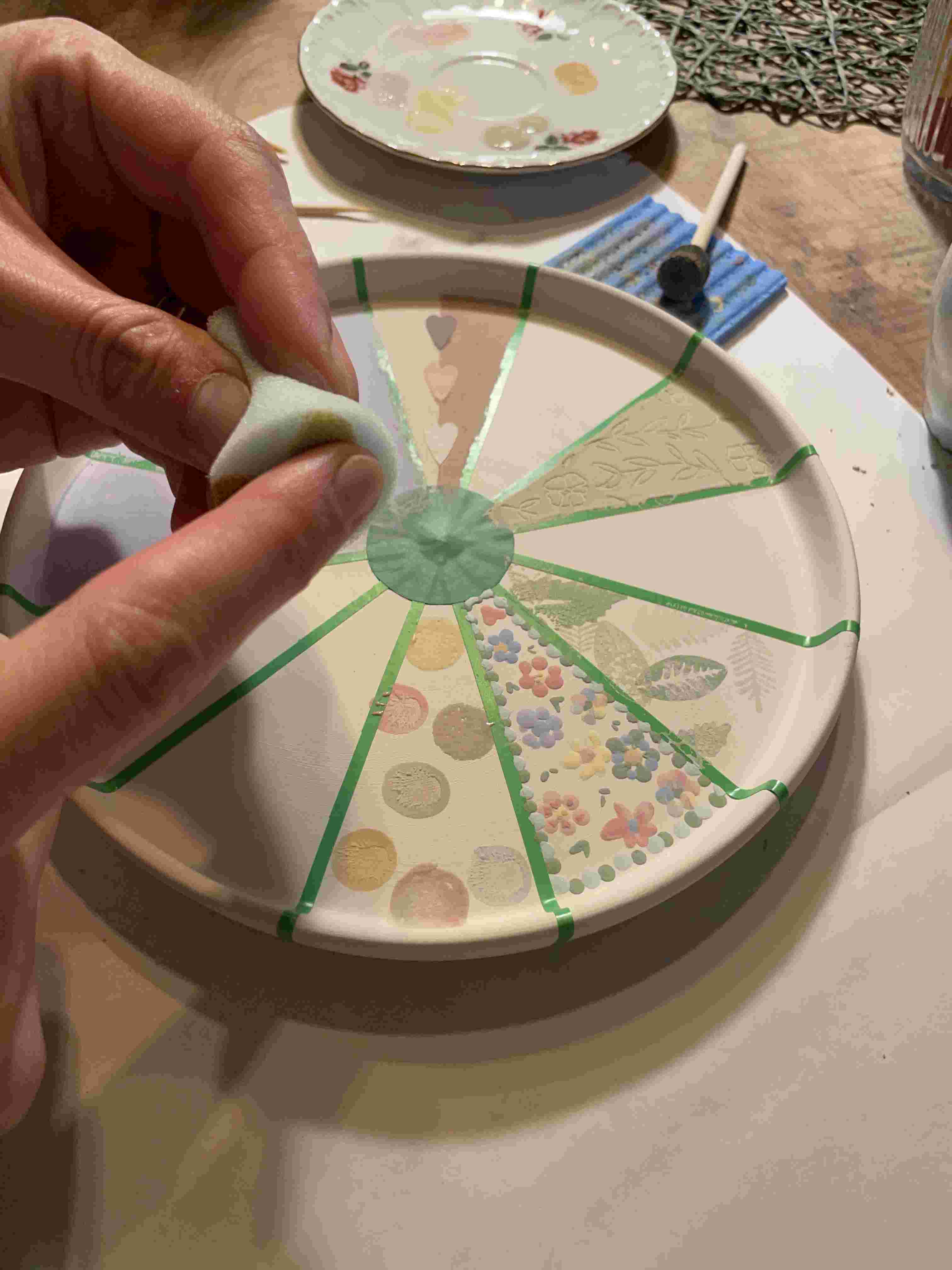
Masking involves protecting certain areas of the ceramic while you paint the rest. After removing the mask, graphic patterns, stripes or simple motifs appear. What do you need? Ceramic piece of your choice Masking tape or adhesive film stickers Underglazes in your chosen colours How it works With our tape (in various widths) you can, for example, easily make a striped mug: apply the tape in stripes, colour in the spaces between, let it dry, peel off the tape and you’re done.

Continue reading

Screen printing

With screen printing you can apply razor-sharp, repeatable patterns to ceramics. You push thickened glaze through a fine mesh screen or stencil, transferring the design precisely onto the surface. What do you need? Ceramic piece of your choice Screen printing screen with design, or a self-cut stencil Liquid underglaze Squeegee or spatula How it works Place the stencil or screen flat on the ceramic. Apply a layer of thickened glaze to the screen and spread it evenly through the mesh with a careful rotating movement of your finger. Lift the screen carefully straight upwards. Let the design dry thoroughly before moving the ceramic.

Continue reading

Sgraffito

Sgraffito is an ancient scratching technique in which you use a scratching tool to cut through a layer of paint to reveal the ceramic or an underlying colour. The result has a beautiful relief-like character. What do you need? Ceramic piece of your choice Glaze Scratching tool (satay skewer) How it works Apply a thick layer of glaze to the ceramic. Let it partially dry but make sure it is not completely dry yet. Then scratch your design into the paint with the tool: lines, patterns or drawings. The base surface is revealed. Wipe away the paint crumbs with a dry brush. This technique looks best with darker colours.

Continue reading

Sketching first

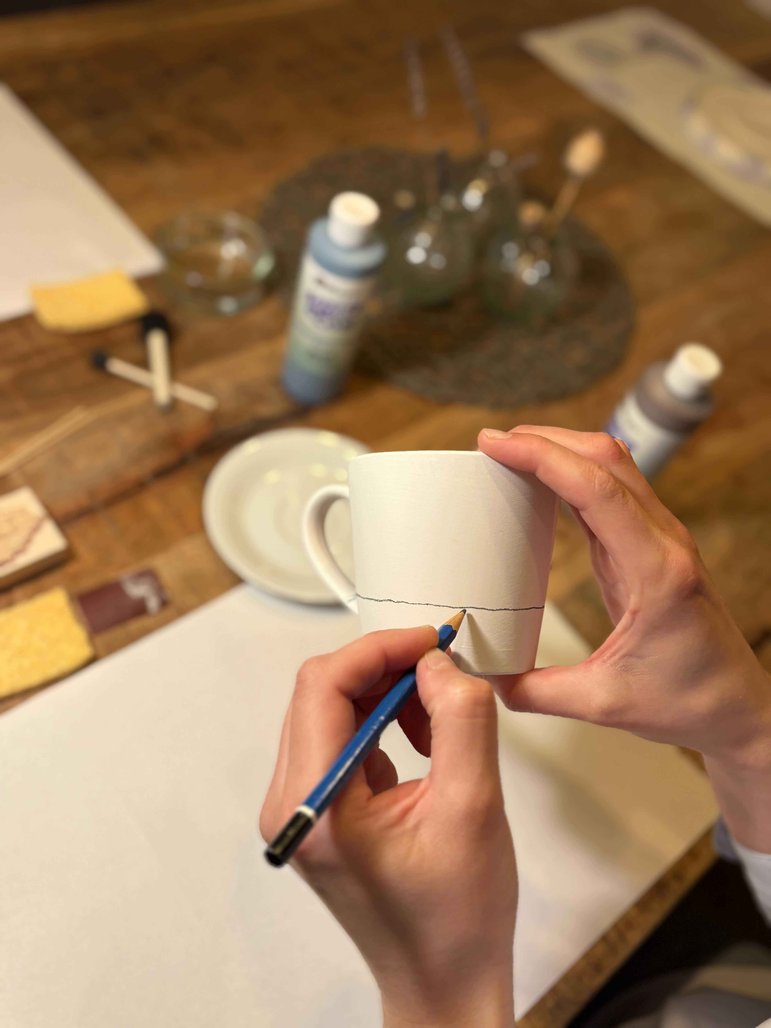
Sketching first means drawing your design in pencil on the ceramic before you start painting. This gives you a guide and prevents you from having to change direction halfway through. What do you need? Ceramic piece of your choice Ordinary graphite pencil (not too hard a point) Optionally a soft eraser How it works Draw your design as lightly as possible onto the ceramic. You simply paint over it — the pencil lines disappear during firing.

Continue reading

Spattering

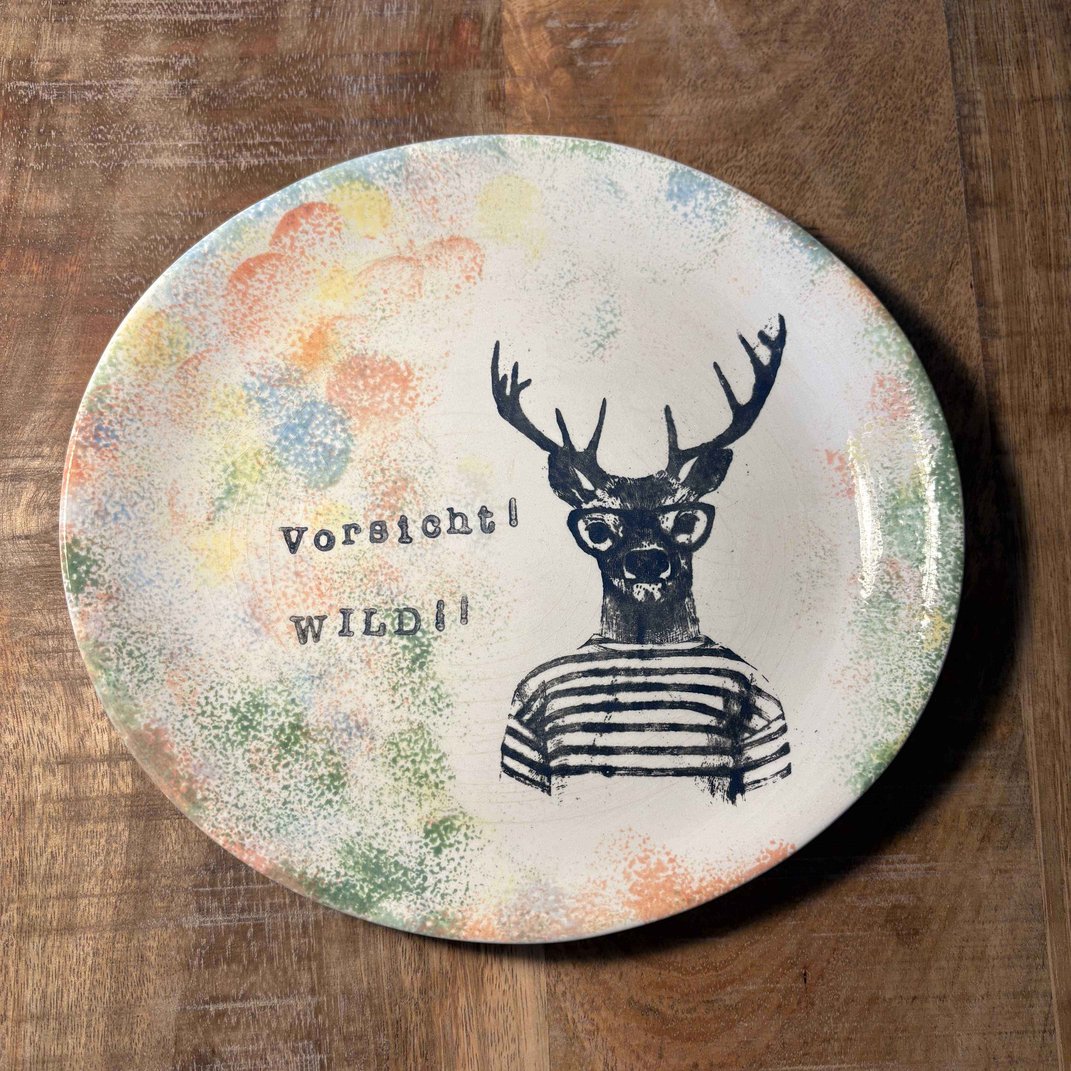
The spattering technique creates a spotted or speckled pattern by flicking glaze with a brush or toothbrush. The result has a wild, energetic quality and is slightly different every time. What do you need? Ceramic piece of your choice Glaze diluted with a little water A toothbrush or stiff brush Protective material for your workspace (it splatters everywhere!) How it works Dilute the underglaze slightly with water. Dip the toothbrush or stiff brush into it and point it at the ceramic. Run your thumb over the bristles to flick the paint. Vary your distance for larger or smaller dots. Cover areas with masking tape or paper if you only want to spatter certain sections.

Continue reading

Stamping

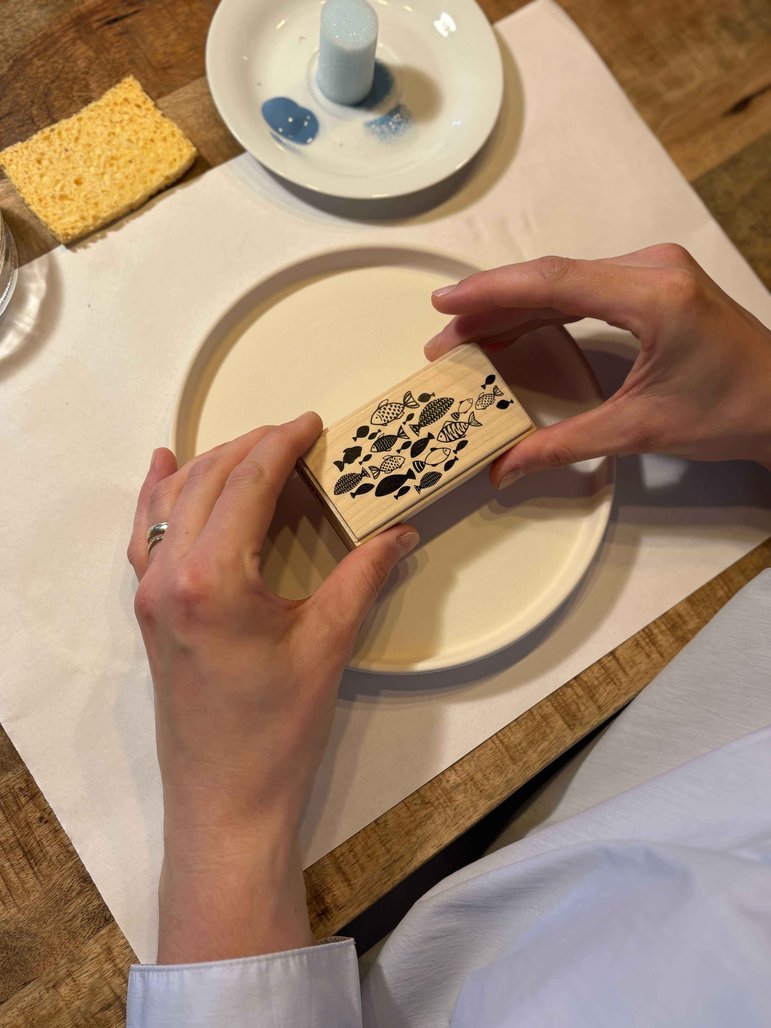
Stamping is a great technique for anyone who wants to create a beautiful pattern quickly. You use stamps dipped in underglaze to press repeating motifs onto your ceramic. What do you need? Ceramic piece of your choice Glaze Stamps Sponge How it works Take a sponge and dab it in the paint — never dip the stamp directly into the paint! Dab excess paint off the sponge well; this creates a kind of ink pad. Gently press the sponge onto the stamp and then firmly onto the ceramic. Done! Test the stamp on a piece of paper first to see how much colour is on it. It’s important to choose a dark colour for stamping, as you can only stamp thinly once — here less is more!

Continue reading

Tracing

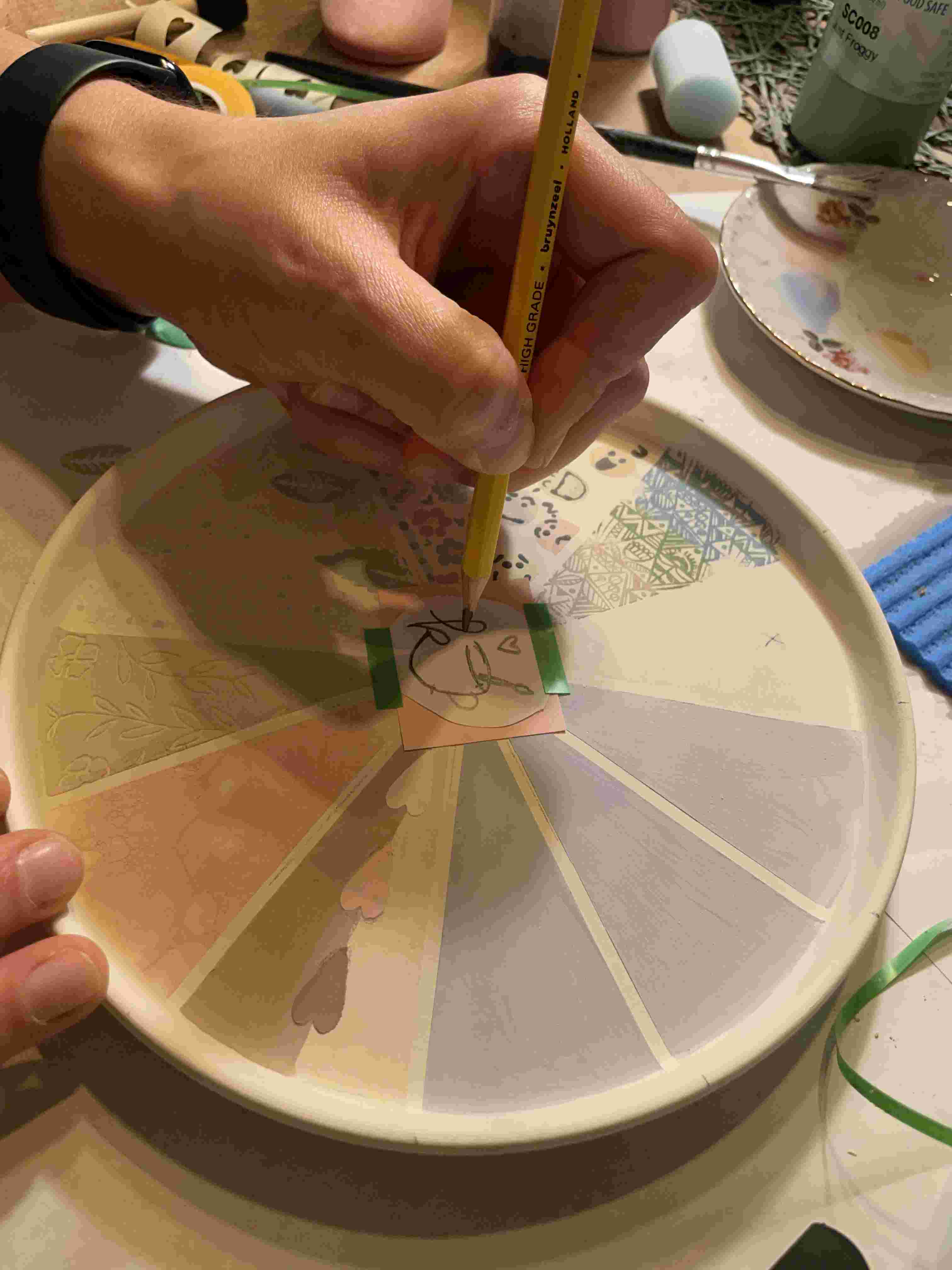
Tracing is a handy technique for transferring an existing design — a drawing, a print or a template — exactly onto ceramics. Ideal if you want to paint a specific motif without having to draw it freehand. What do you need? Ceramic piece of your choice Your design on paper (printed or drawn) Carbon paper and a soft pencil (Tape to hold the paper in place) How it works Place the carbon paper on your ceramic. Place your design on top and secure everything with a piece of tape if needed. Trace the lines of your design with a pencil. The carbon transfers the lines onto the ceramic. Remove the paper and you have an exact transfer of your design. The lines disappear during firing.

Continue reading